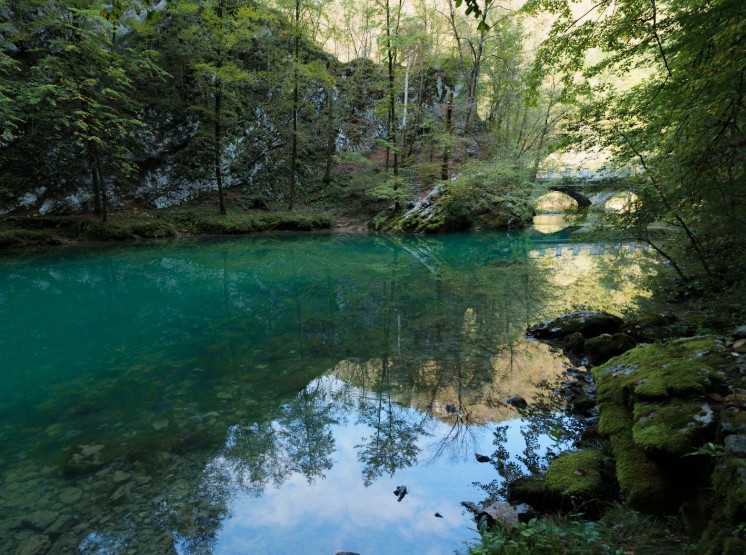
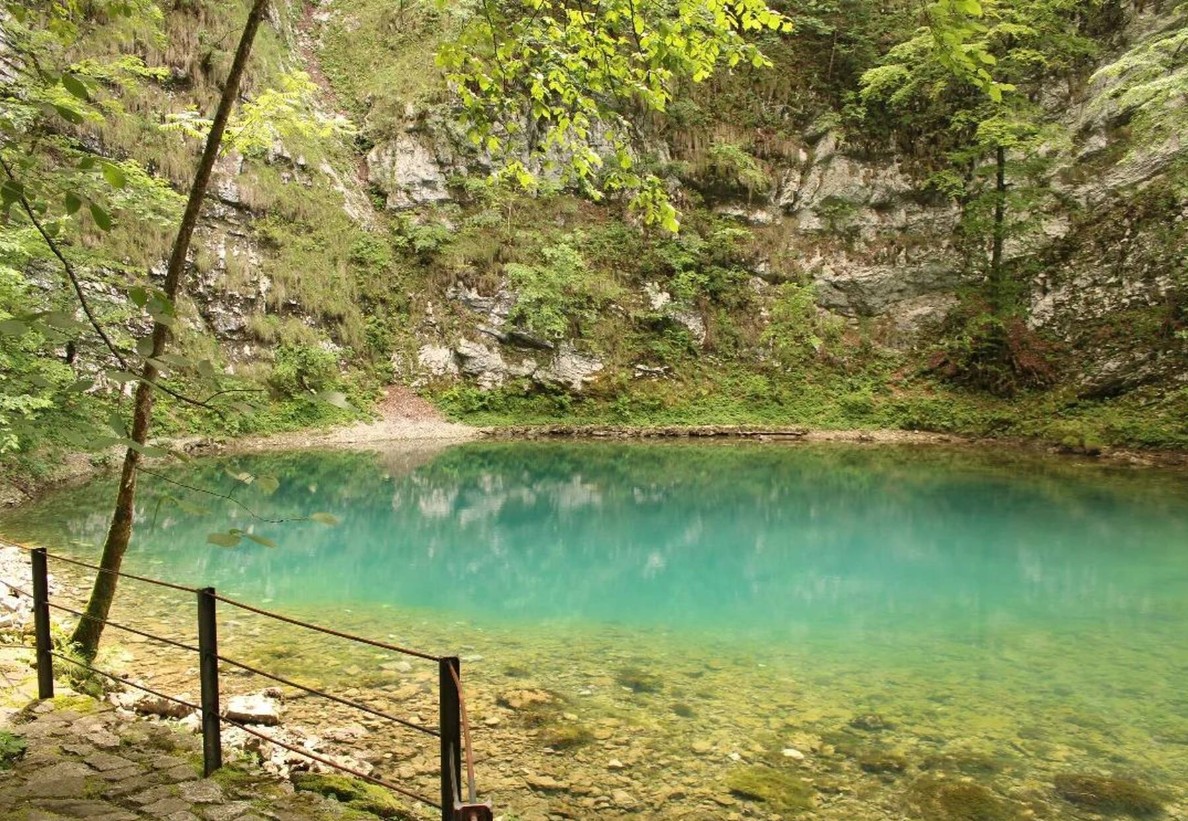
Divje jezero (Wild Lake)_
Details
Estimated Visit Time:
15–30 min
Best Season:
Spring, Summer, Autumn
Before You Go - Nature:
Swimming prohibited, Diving prohibited, Protected area, No food service, No toilet, Respect nature protection rules
Access Type:
Forest path
Parking Situation:
Small parking available
Parking Payment:
Free
Access Notes:
Narrow road, Best visited early, Caution in wet weather, Not suitable for low vehicles
Access & Parking Description:
Park in the small parking area near Divje jezero and follow the signs toward the lake. From the parking area, it is only a short and easy walk to the main viewing area, usually around 1–3 minutes on a mostly flat forest path.
Entry Fee:
Free
Suitable For:
Couples, Families, Solo visitors, Photographers, Nature lovers, Short stop
Walking Difficulty:
Easy
Family Friendly:
Yes
Child Age:
Toddlers, Young children, Older children, Teenagers
Stroller accessibility:
Partly
Child safety note:
Near water, Uneven terrain, Slippery when wet, No protective barriers
Wheelchair Access:
Partly
Pet Friendly:
Yes
Safety Notes - Nature:
Slippery terrain, Caution after rain, Watch children closely, Near water, Uneven terrain, No protective barriers
OLD_ Highlights - Nature:
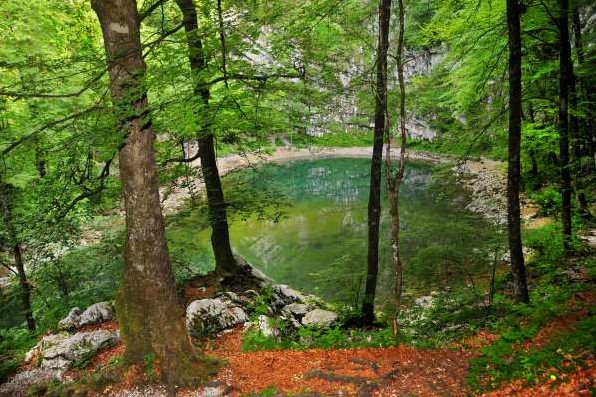
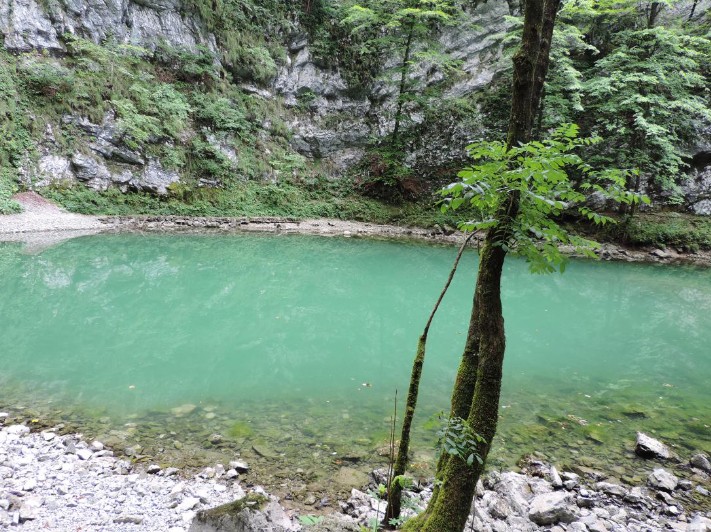
Beautiful natural scenery, Peaceful atmosphere, Unique natural feature, Scenic viewpoint nearby, Clear water views
Interesting Facts:
1. Dual Nature: A Lake That is Also a Karst Spring [desc] Divje jezero is not just a classic body of standing water, but a powerful Vauclusian karst spring. The water emerges from a deep underground siphon, meaning the lake has a dual nature – on the surface, it appears as a small, calm lake, but in reality, it is a spring that feeds the entire river system.
2. The Mysterious Underground Siphon with No Bottom [desc] While it looks small on the surface, it hides a massive, steep underground gallery beneath it. Divers have explored it to a depth of approximately 160 meters, a record set in 2001 by Italian diver Luigi Casati, but the actual bottom has not yet been reached.
3. Challenging Depths That Have Claimed Lives [desc] Due to the extreme depth, narrow underground passages, darkness, cold, and strong currents, diving in Divje jezero is considered one of the most dangerous cave diving endeavors in Europe. This unpredictability has unfortunately taken its toll, as four cave divers have lost their lives in the depths of the lake (two accidents in 1995, one in 1997, and the last one in December 2001).
4. Wild Eruptions That Justify Its Name [desc] The lake got its name from its unpredictable and wild character during heavy rainfall. When pressure builds up in the underground system, the water literally erupts with flow rates reaching up to approximately 60 m3/s, which creates a noticeable water cone in the center of the lake while the water level rises rapidly and rages.
5. Slovenia's Shortest River That Flows Backward [desc] Flowing out of the lake is the Jezernica, which, at only about 55 meters long, is officially the shortest surface river in Slovenia. Although it is not the shortest in the world, it represents a true global phenomenon because it occasionally flows backward: when the Idrijca River rises significantly, its water begins to flow up the riverbed of the Jezernica and fills the lake basin.
6. Home to the Proteus and the Carniolan Primrose [desc] The unique underground conditions provide a sanctuary for exceptional wildlife – the famous proteus (Proteus anguinus, also known as the human fish or olm) lives in the cave depths beneath the lake, while the steep cliffs above the lake are a botanical paradise where the Carniolan primrose (Primula carniolica) thrives, a beautiful endemic plant that grows only in Slovenia.
7. Slovenia's First Open-Air Museum [desc] Because of its invaluable geological, hydrological, and botanical worth, the area is a highly important natural monument. It was protected as early as 1967, and in 1972, Divje jezero officially became Slovenia's first natural museum in the wild (open-air museum), which today proudly stands under the protection of the UNESCO Global Geopark Idrija.
2. The Mysterious Underground Siphon with No Bottom [desc] While it looks small on the surface, it hides a massive, steep underground gallery beneath it. Divers have explored it to a depth of approximately 160 meters, a record set in 2001 by Italian diver Luigi Casati, but the actual bottom has not yet been reached.
3. Challenging Depths That Have Claimed Lives [desc] Due to the extreme depth, narrow underground passages, darkness, cold, and strong currents, diving in Divje jezero is considered one of the most dangerous cave diving endeavors in Europe. This unpredictability has unfortunately taken its toll, as four cave divers have lost their lives in the depths of the lake (two accidents in 1995, one in 1997, and the last one in December 2001).
4. Wild Eruptions That Justify Its Name [desc] The lake got its name from its unpredictable and wild character during heavy rainfall. When pressure builds up in the underground system, the water literally erupts with flow rates reaching up to approximately 60 m3/s, which creates a noticeable water cone in the center of the lake while the water level rises rapidly and rages.
5. Slovenia's Shortest River That Flows Backward [desc] Flowing out of the lake is the Jezernica, which, at only about 55 meters long, is officially the shortest surface river in Slovenia. Although it is not the shortest in the world, it represents a true global phenomenon because it occasionally flows backward: when the Idrijca River rises significantly, its water begins to flow up the riverbed of the Jezernica and fills the lake basin.
6. Home to the Proteus and the Carniolan Primrose [desc] The unique underground conditions provide a sanctuary for exceptional wildlife – the famous proteus (Proteus anguinus, also known as the human fish or olm) lives in the cave depths beneath the lake, while the steep cliffs above the lake are a botanical paradise where the Carniolan primrose (Primula carniolica) thrives, a beautiful endemic plant that grows only in Slovenia.
7. Slovenia's First Open-Air Museum [desc] Because of its invaluable geological, hydrological, and botanical worth, the area is a highly important natural monument. It was protected as early as 1967, and in 1972, Divje jezero officially became Slovenia's first natural museum in the wild (open-air museum), which today proudly stands under the protection of the UNESCO Global Geopark Idrija.
Photo Tips:
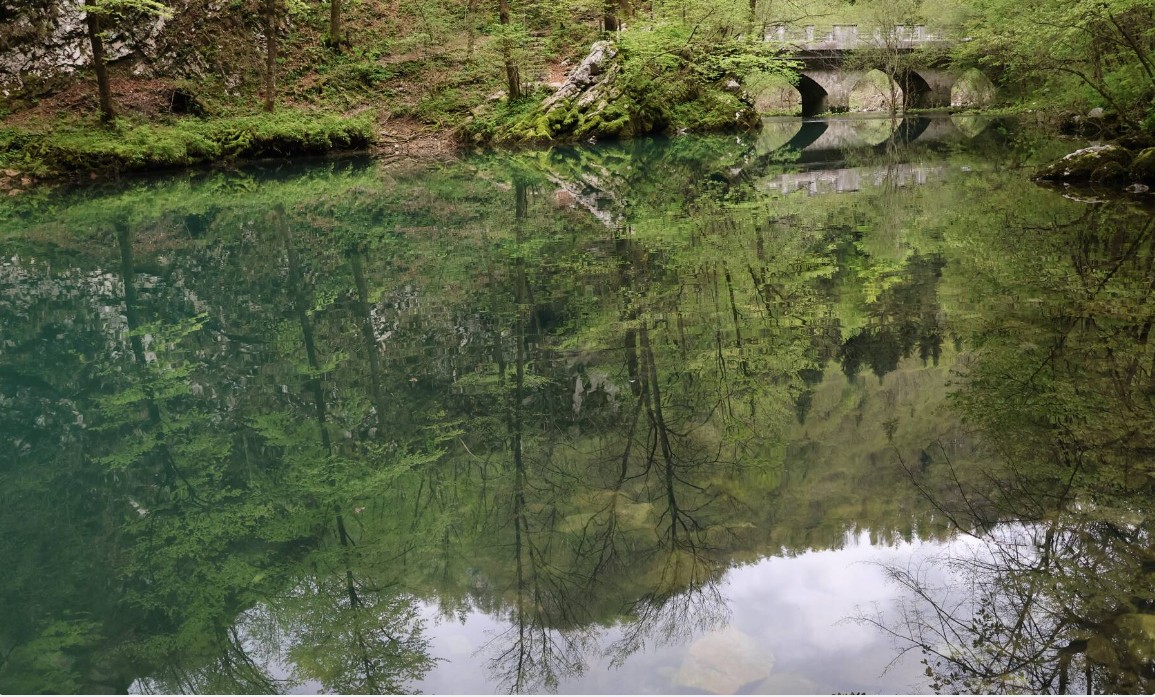
Visit in the morning or late afternoon for softer light and better reflections on the water. The best photos are often taken through the surrounding trees, using the turquoise lake, forest, and rocky edges as a natural frame.